
Purposeful Third Act

Why retirement needs a rethink
Purposeful Third Act has evolved from my personal journey to building a movement—offering an alternative path for life after full-time careers. By embracing a portfolio life, including meaningful pursuits with social and economic impact, we can create both personal fulfillment and a brighter future for the next generations. Here’s why I believe it’s time to redefine aging as a period of great potential.
We’re living longer and healthier lives
We’re in the midst of a longevity revolution. The average lifespan of Canadians has increased by about 25 years over the past century: those reaching 65 are now expected to live to 87 (women) and 84 (men), bringing within reach the possibility of a 100-year life. This unprecedented gift of time demands we reimagine aging not as a wind-down, but as a powerful phase of purpose and contribution. What if this chapter became our best one? What if our accumulated wisdom could enrich not just our lives, but our families, communities, and the broader society?
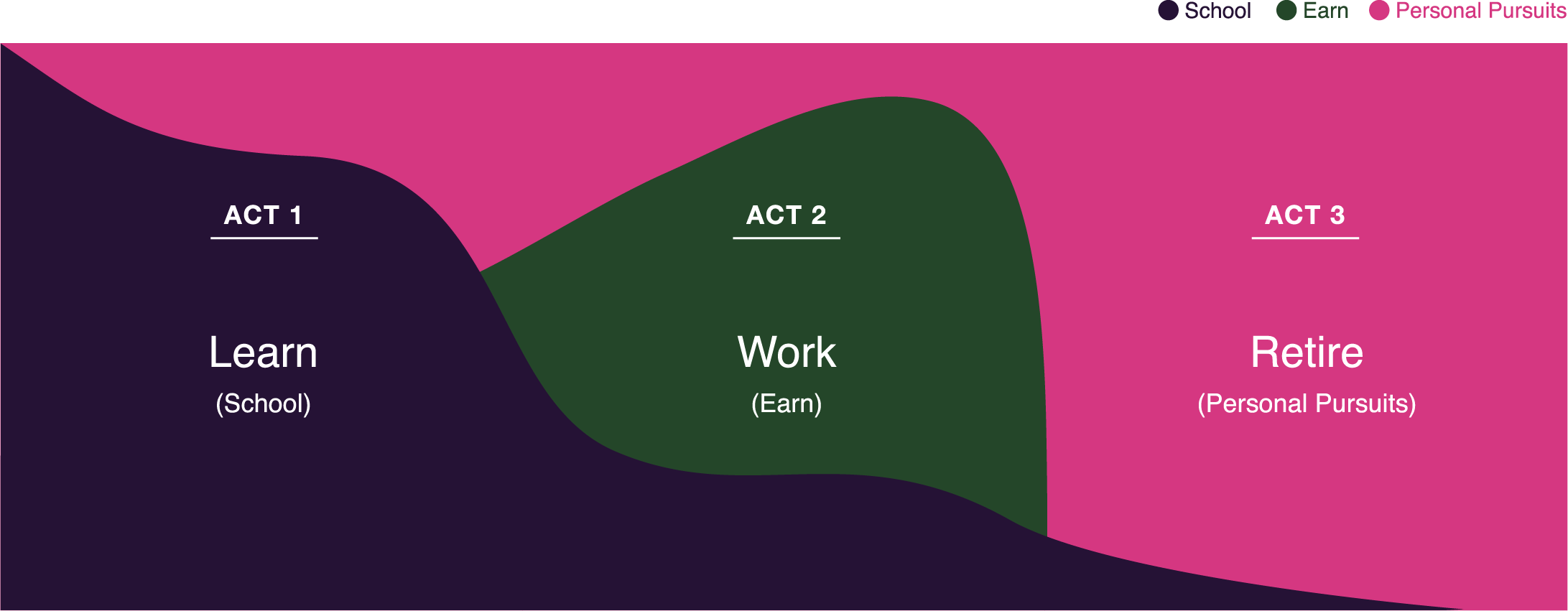
Old Paradigm

New Paradigm
Yet our society remains trapped in an outdated mindset that views life as a linear sequence: school, work, then retirement in our late 50s or 60s. This fixed view squanders the talent and insights older adults could contribute in their remaining two or more decades. Instead, let’s imagine a portfolio life in our third act, where our hard-earned knowledge, social capital, emotional intelligence, and sound judgment become the foundation for personal and professional pursuits that benefit society. This wisdom, woven from what we know and what we’ve been through, can be shared through advising, mentoring, inspiring, speaking, connecting, convening and engaging in our communities.
People thrive when they live with purpose - their North Star
Our yearning for purpose has deepened as we have reflected on what truly matters. Research shows purpose drives positive emotions, wellbeing, and life satisfaction, while reducing stress, anxiety, and depression. Having purpose motivates us to do more when we believe our actions can positively impact the world.
Society and the environment benefit from the Purposeful Third Act movement
Today's challenges—rising inequality, polarization, climate change, learning and reskilling to work alongside the rapid adoption of AI, and the mental health crisis—are widening social and economic divisions. Only 30% of young Canadians, our children and grandchildren, expect to enjoy a better standard of living than their parents. Meanwhile, research by the Conference Board of Canada shows that active, healthy seniors would add $2.1 billion to the economy from 2023 to 2040, averaging $122 million in annual social and economic value.
Purposeful Third Act challenges
Transitioning to a P3A can be challenging and isolating. Loss of identity, status, routine, and networks may bring self-doubt and shame (read more about Zabeen’s experience here). There are limited resources and communities supporting the development of P3As for individuals; businesses, governments and educational institutions haven't yet adapted to this new reality. We have the capacity: we just need the structure, support, and tools to make our longest chapter our best one.
P3A is a Call to Action
P3A offers both personal fulfillment and a response to society's pressing challenges. Global events have sparked a great rethink across generations about what we want from life. My vision is to scale P3A into a movement by inspiring and enabling leaders and professionals to lead P3As and to catalyze cross-sectoral collaborations to build an ecosystem of support. We all benefit when more people contribute their valuable skills and wisdom following successful full-time careers.
In conversation with
Purposeful Third Act role models
What are you doing now?
President and CEO, Arora Digital Solutions Corporation
International Data/Digital consultant, World Bank Group
Adjunct Lecturer, Harvard Kennedy School
Distinguished Fellow, Canada School of Public Service
Board Member, Center for International Governance Innovation
Board Member, Open Data Watch
Board Member, CHEO
Fractional Chief Data Officer, CNIB
Technical Advisor, American Statistical Society
Mentor, Coach, and Active Listener
Public Speaker, Facilitator, and Author
-
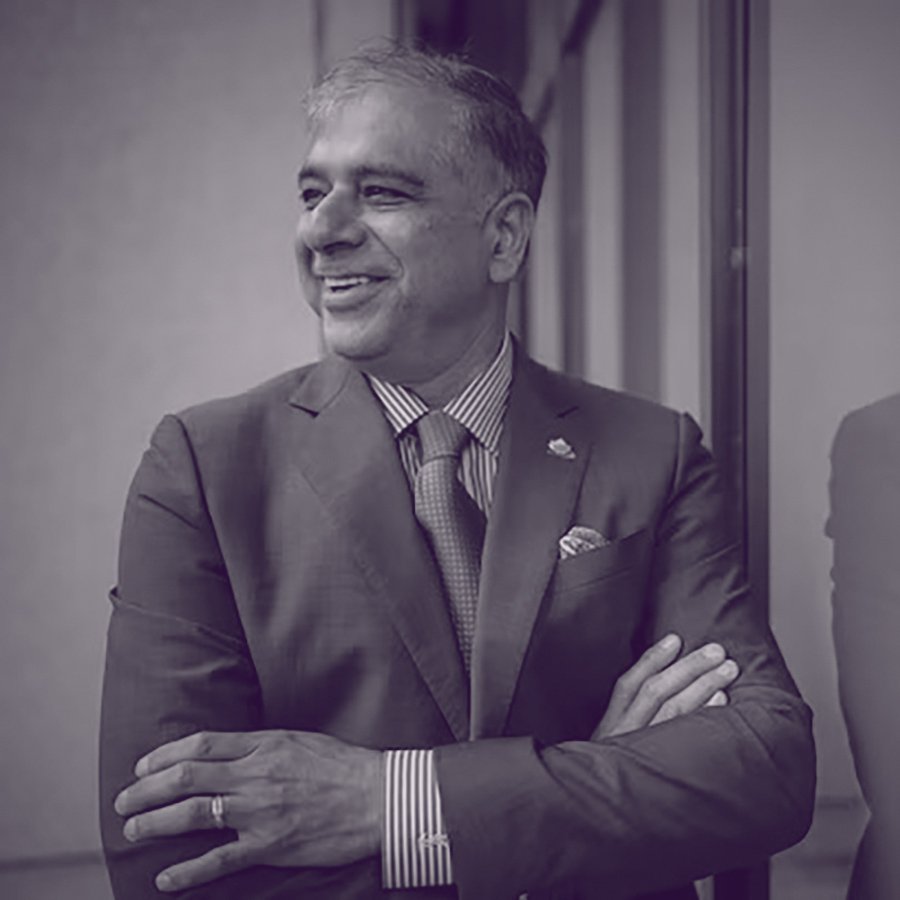
Chief Statistician of Canada
-
Anil has dedicated his professional career to partnering with the business sector, academia, internationally and with all three levels of government, building a culture of innovation, successfully delivering complex and transformational digital solutions, strengthened consumer and citizen trust, and increased organizational relevance and impact.
He has authored a number of strategies and papers, earning numerous accolades. He was named Public Policy Forum Testimonial Dinner Honouree (2025), Outstanding Innovator (2023), A Top 25 Canadian Immigrant (2022), Policy Maker Metropolis Canada (2022), as well as receiving several leadership awards from the business community and the Association of Professional Executives of the Public Service of Canada (2009-2024).
Anil is passionate about creating a better future for Canada and Canadians by supporting the new generation of leaders tackling some of today’s most pressing challenges.
-
I came to Canada at age 11. Like so many immigrants, I faced numerous challenges, worked hard and I feel extremely fortunate to have had helpful guidance, a good education, an incredibly supportive spouse and family, opportunities, a great professional career, amazing bosses and mentors, a supportive network, and a vibrant social life. I have always believed that the country moves forward only when we are willing to give back to our areas of influence, small or large. My Purposeful Third Act is rooted in this philosophy and my position of current privilege.
After retiring from a very senior government position, I began sampling a rich selection of opportunities—some I’ve created and others have been presented to me. I know I won’t fall in love with every choice: I will abandon a few while embracing activities and options that once would have been foreign to me. I wanted to try my hand at teaching and that has led me to take on the role of Adjunct Professor at Harvard Kennedy School as well as a Distinguished Fellow at the Canada School of Public Service. I enjoy researching and writing about immigration, productivity, AI and the digital economy, collaborating with academics, and lecturing at Canadian universities and international organizations.
Although it has been years since I was in the private sector, I set up a corporation to offer consulting services to paying clients. I wanted to do some volunteering as well, which has resulted in me joining a few international and Canadian not-for-profit boards where I can leverage my experience and passion.
I had the chance to play ball hockey with my youngest son over the summer and a brand new guitar awaits some well needed lessons! I am approaching this phase of discovery and data collection with an open mind to explore what exists out there, who I am, and who I want to be. Meaning and purpose fuel me. While the “what” may change over time, my aim is to pass on the skills and expertise I was fortunate to develop over decades, in formal and informal ways that help others reach their full potential and be impactful.
-
I have an internal desire to pursue happiness through purpose, networking and service after a fulfilling full-time career. Pursuing the principles behind P3A serve as inspiration and incentives to lead a healthy, happy, full life.
-
This is a great time to think about what legacy you would like to develop; what purpose drives you; what difference you want to make in your own life and in the lives of others. Research has demonstrated that remaining active, being part of networks, pursuing a purpose where you make a real impact can lead to happier and healthy lives long into your retirement years. Develop your own P3A plans, communicate them and develop a roadmap that works for you to pursue them. It is never too early or too late! Create the enabling conditions that work for you. The workplace, whether in the private or public sector, is being disrupted. I see so many people searching for meaning and fulfilment. A P3A provides a tangible and inspiring framework to help you remain engaged, healthy and happy.
-
My benchmarks include intellectual curiosity and learning. Am I discovering new things each day? Am I reading and developing interests I did not previously have? Am I learning to fail gracefully and taking intelligent risks? Am I helping future leaders and organizations see beyond the horizon?
Knowledge sharing is important to me: I track the hours and effort expended each month sharing and passing on my knowledge and expertise to the numerous networks and groups I belong to. Finally, I track the time I spend on intellectual, physical and spiritual pursuits, as well as family and leisure, to support a healthy, fulfilling and happy life. Time is now my most prized possession!

What are you doing now?
I am a Renaissance Woman: embracer of life, change maker, connector, global leader, and lifelong learner.
-
CEO of Colleges and Institutes Canada
-
Denise dedicated her career to strong values-based leadership in the public service and working in education at the beginning of her career.
She worked for over 28 years in the federal government, her last posts being as Head of a federal Crown Corporation and in three roles as an Assistant Deputy Minister: in talent management, public affairs and in corporate services. She also worked in several federal departments in the economic, social, scientific and cultural sectors: ESDC (formerly Human Resources Development Canada), National Defence, Natural Resources Canada, Canadian Heritage and the Public Service Commission. Prior to that, she was a teacher and worked in a Department of Education in the Northwest Territories. She has lived and worked in Ontario, Quebec and the Northwest Territories.
Denise has a Master's in Education and three Bachelors in Biology, Humanities and Education. She holds an ICD.D from the Institute of Corporate Directors, and designations in ESG Governance and in Climate Change and Diversity from Competent Boards. Denise is passionate about sailing, skate skiing, coaching and networking. She is active on multiple boards across Canada and internationally.
-
In a way I started my P3A after retiring from the federal government, working full time in the nonprofit sector where I was very successful as the CEO of Colleges and Institutes Canada. After 10 amazing years working with members from all parts of Canada and in 25 countries, I shifted to being an entrepreneur and founded Denise Amyot & Associates in 2023, offering executive coaching and experiential group leadership training as well as consultation. In my first year, I ran groups on three continents: in Canada, Africa, and the Caribbean. My executive coaching practice is flourishing and is bringing me a lot of satisfaction.
As governance is of great interest to me, I have a diverse portfolio sitting on several boards in the education, science, international trade and health sectors. My corporate boards include LCI Education, MSM Unify and the Qatar Foundation. My nonprofit boards include the World Federation of Colleges and Polytechnics, CUSO International, Academics Without Borders, Forum for International Trade Training and Health Standards Organization. Most of my boards are international. However, I have two at the national level (Palette Skills and Canada Science Policy Centre) and one at the provincial level (Hôpital Montfort). I can say that my governance portfolio is very varied and intense.
I continue to take every opportunity to learn by attending conferences, seminars and courses, and participating in learning and new experiences through my boards or my linkages to different organizations including women’s groups or personal interest. One example: I’m learning Arabic and just completed a program on Emotional Intelligence.
-
Retiring from a role and team I enjoyed was a very difficult decision. I loved what I was doing but I know life isn’t eternal and there was still so much I wanted to explore, especially after I’d lost many former colleagues and friends in recent years. I was very emotional for several months. Then one night as I was on the plane reviewing the content of the leadership training I was about to deliver in Senegal, I felt compelled to do one of the exercises I was going to offer—The Tree of Life—for myself. Three hours later, I could clearly see all I wanted to achieve. So much that I now incorporate the Tree of Life into my coaching practice. It’s extremely powerful when you’re going through a transition or to prepare for your next move.
-
Do the Tree of Life exercise.
Make sure you find ways to give back.
Learn something new every day, participate in conferences, take courses, read on new topics, experiment.
Embrace technology.
Say yes to new experiences (I was asked by two authors to review their books before they were published).
Choose wisely and learn to say NO (make a list of things you say yes and no to).
Keep a routine: exercise, in person and virtual meetings, allocate time for yourself, holidays, family, friends, walks, hobbies, etc.
Do not wait for later. Seize the day: you never know if opportunities will come back tomorrow (I had an opportunity to go to Ethiopia and Congo and China in the same month).
Discover the world.
P.S. Do not wait until you retire to participate in boards and advisory committees.
-
I am intentional and resourceful with my time. This summer, my spouse and I decided to spend eight weeks on our sailboat. I measure my portfolio by the pleasure and satisfaction I gain from giving back and feeling useful, the impact I have on organizations and mentoring and coaching, and by my level of happiness: I especially enjoy adding new stimulating experiences to my life. I can say my current P3A is as varied, fulfilling and exciting as my career has been and I love it. I was also delighted to get an honorary Doctorate of Laws from Kwantlen Polytechnic University.
Ilse Treurnicht
What are you doing now?
impact investor, director, advisor, friend
-
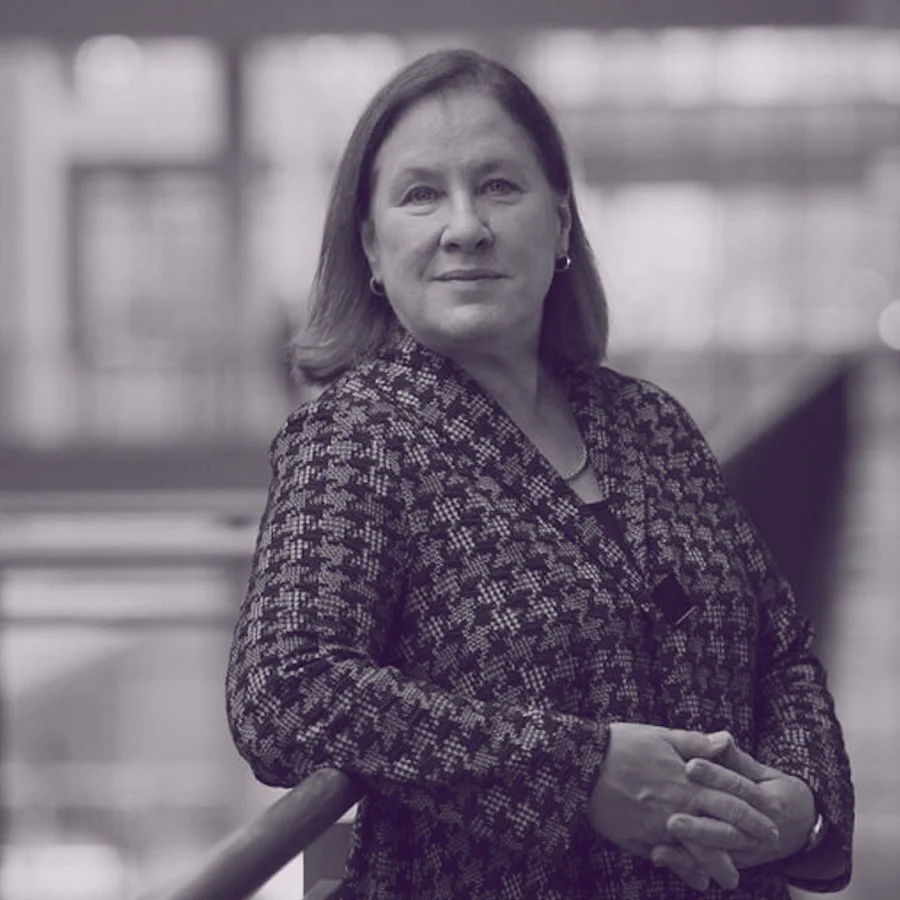
Former CEO of MaRS Discovery District
-
All my work has been at the messy intersection of science, business, money and public policy, trying to create new pathways for innovators to make the world a little better. This winding road straddled the profit and purpose sectors, the commercialization of research, startups and ecosystems, venture capital and impact investing—from very local to global contexts. Along the way, I worked with extraordinary talented academics, entrepreneurs, community leaders, change agents, investors and policy makers. I have tried to focus my energies on hard problems, problems worth solving—because these attract people worth spending time with. And who you travel with makes all the difference.
-
This act consists of a busy portfolio of projects, still connecting the multi-sector pillars that got me here. I choose these projects carefully. Together, they allow for synthesis and integration of a range of diverse experiences. That means my efforts can be more strategic and focus on supporting and enabling others who are leading the way.
-
I came to Canada as a chemistry post-doc, changed plans and stayed. Thus unfolded a magical adventure, and I am deeply grateful for the opportunity to live, work and raise a family in this amazing country. From this blessed spot, the simple question is how can I best use what I have gained to contribute something positive? Starting with very small actions in my immediate circles, all the way to more indirect, catalytic efforts to help improve the systems that drive social and economic wellbeing in Canada and beyond.
-
Dr. John Evans, a remarkable Canadian and the visionary behind MaRS, once said to me, in his quiet, wise manner, “The most important thing is to figure out what you can uniquely do.” This is a particularly good time to ask that question. We have all traveled unique paths, learning from unique fellow travelers. Time is incredibly precious. What can you uniquely do now?
-
In a qualitative, rather than quantitative manner. I am aiming to maintain a delicate balance around various priorities. I ask myself: does it matter, does it move the needle, can I be useful, am I learning new things and working with amazing people, does it bring joy, does it leave time for the people I love and a new dog?

What are you doing now?
Partner, Prospectus Associates
Co-founder, The Power Shift
Founder, The Iron Network
Advisor, coach, board member, and public affairs strategist
-
Senior leader in federal politics, diplomacy and public service
-
After 30 years in federal politics, diplomacy and public service, Frédérique “retired” in 2024 at age 55. She knew from the beginning that she did not want a traditional retirement, and certainly did not want to stop contributing. What she wanted most was agency.
Today, her Purposeful Third Act is intentionally a portfolio. As a Partner at Prospectus Associates, she advises organizations navigating complex public affairs, communications and strategic challenges. She is also the co-founder of The Power Shift, a platform examining how power operates across the sectors shaping Canada’s future, from politics and defence to infrastructure and energy.
Through her own initiative, The Iron Network, she coaches and leads workshops for young professionals, executives and teams navigating transitions, leadership challenges and high-pressure environments. She also sits on boards, remains deeply engaged in public life and continues to work hard — but with more choice about where she invests her energy and why.
-
My Purposeful Third Act is about agency, contribution and flow.
For the first time in my life, everything feels like it is coming together. The Japanese concept of ikigai resonates deeply with me: the intersection of what you love, what you are good at, what the world needs and what gives your life meaning.
I no longer feel the same need to prove myself or impress anyone. I am also no longer stretched in every direction raising three children while managing demanding leadership roles. Instead, I feel free.
This chapter gives me the freedom to use my experience, energy and values in ways that are genuinely of service to others — while continuing to learn, stay challenged and discover new dimensions of myself.
-
One of the ideas that most influenced me during my transition came from the Good Life Project podcast: the concept of a “2x20” — giving yourself two years to figure out the next twenty.
That mindset gave me permission to pause, explore, test ideas, change my mind and rethink what I wanted this next chapter of life to look like. That permission changed everything.
A few moments also crystallized my thinking. At one point, I was offered a very senior role and realized deep down that I did not want that rhythm or that type of pressure. At another point, I accepted a consulting contract that was completely wrong for me and realized I no longer wanted to spend my time doing work that did not bring me energy or purpose.
Walking away from both opportunities felt surprisingly liberating. That, to me, is the real Freedom 55.
-
Don’t rush.
Rest. Explore. Daydream. Reinvent yourself a little. Try things without needing them to become permanent. Give yourself permission to change your mind.
We spend so much of our earlier careers operating inside structures, expectations, financial pressures and responsibilities. A third act can be an opportunity to reconnect with parts of yourself that may have been dormant for years: creativity, curiosity, entrepreneurship and joy.
Your next chapter does not need to look linear or conventional.
-
I measure success differently now.
Professional accomplishment still matters to me, but the real return on investment is seeing my experience, energy and values being of service to others.
Whether I am helping a client navigate a difficult challenge, coaching a young professional through uncertainty, or contributing through The Power Shift to larger conversations about women’s participation in the sectors shaping Canada’s future, that sense of contribution feels deeply meaningful.
I also love that I am still learning, still challenged, still meeting fascinating people and still discovering new dimensions of myself.
At 55, I think I may just have started one of the most interesting chapters of my life yet.

What are you doing now?
Managing Director, The Return on Disability Group
-
General Counsel, Deloitte LLP (Canada)
-
General Counsel and Secretary to the Board, Deloitte LLP (Canada) from 2000 to 2020. Appointed General Counsel Emeritus and Senior Partner, Indigenous and Accessibility, leading Deloitte’s Reconciliation and Disability initiatives. In June 2021, retired from the partnership and now serve as Managing Director, The Return on Disability Group.
In 2018, named Canada’s Outstanding General Counsel and in 2021, recognized by the Canadian Corporate Counsel Association with the R.V.A. Jones Award and later in the same year was awarded the Lifetime Achievement Award as part of the annual Canadian General Counsel Awards.
In October 2024, appointed Chair of the Conference Board of Canada.
-
I serve as Managing Director, The Return on Disability Group. We help our clients better serve customers and employees with disability, better. We focus on helping our clients learn and design from disability. PWD represent 27% of the population. That is a huge marketplace opportunity which organizations miss. In my role I have conversations with senior leaders, hoping to transition their thinking from social to business opportunity and employee productivity improvement. Everyone wins when organizations approach disability in this way.
I am serving as Chair of the Governance Committee of the Disability Screen Office and was appointed Chair of the Conference Board of Canada. For a number of years I coached Special Olympics Basketball and am a Deloitte certified coach, coaching and mentoring folks both inside and outside the legal profession. I co-chair the University of Saskatchewan College of Law fundraising campaign and for two years running, have organized a Legal Executive Forum for Saskatchewan based General Counsel and their teams. I am toying with the idea of writing a book on governance in a private partnership.
-
Mandatory retirement. Love it and embraced it as it caused me to think about and build a meaningful P3A. I loved what I did, the question I had was how I could double down on a few things.
-
Maybe for the first time in your career, this phase of your career is about you. Know what brings you happiness in what you do now, where do your interests lie. List your skills (there will be many). Create the perfect role based on your skills and interest. Talk to others- ask questions and be open minded. Keep a journal about what you learn. Modify your plan. Create the role, if that role does not exist. But most importantly, be honest with yourself and with others. And, be quick to pivot if what you are doing is not working for you.
-
Important to have a ‘retired’ mindset- though you are adding value in what you do and what you are giving, you need to keep space for family, yourself and the other interests you have. There needs to be balance and harmony in your life. What you do now should make you happy, bring you pleasure. And if the value you add with your skills and experience is not compensated, you need to be comfortable with that, or find something where all of what you have to offer is compensated. That said, there will be many organizations which could use your skills and experience and a portion of your time needs to be designated pro bono. My examples are the Conference Board, Disability Screen Office, coaching and mentoring and building community amongst General Counsel and their teams.

What are you doing now?
Board Chair, Canadian Air Transport Security Authority
Board Director, Mobilité Infra Québec
Volunteer Board Member, World Wildlife Fund Canada
Mentor
Proud new grandmother
-
Deputy Minister, COVID-19 Recovery, and Deputy Secretary to the Cabinet, Operations, Privy Council Office
-
Thao Pham is a senior leader whose career has focused on the public sector, governance and complex national challenges in the areas of infrastructure, transportation and environmental policies.
Before entering her Purposeful Third Act, she held senior Government of Canada roles, including Deputy Minister, COVID-19 Recovery, and prior to that as Deputy Secretary to the Cabinet, Operations, in the Privy Council Office, where she provided advice at the highest level of decision-making on wide ranging domestic policies, and led the coordination of the federal pandemic response. Before that, she was Associate Deputy Minister of Transport Canada. Earlier in her career, she held senior leadership roles at Infrastructure Canada, Environment Canada and Canada Economic Development for Quebec Regions, leading complex national programs, operations and major projects.
Today, she brings that experience to board governance as Board Chair of the Canadian Air Transport Security Authority, Board Director of Mobilité Infra Québec, and volunteer board member of World Wildlife Fund Canada. She is also an honorary senior fellow at the University of Ottawa’s Graduate School of Public and International Affairs and holds the ICD.D designation.
-
Currently, my Purposeful Third Act is a diversified portfolio of professional and personal activities that bring me a great deal of satisfaction.
Professionally, I care deeply about public trust in institutions — a cornerstone of a healthy democracy — and I am excited to continue to contribute to good governance through my board roles.
I also invest in continuous learning, including earning my ICD.D designation and staying current on emerging trends such as artificial intelligence, cybersecurity, the future of work and economic dependence on nature.
Mentorship is also an important part of my P3A. I received great support and encouragement throughout my career. and I believe those of us who have received that kind of support have a duty to give back. I mentor new executives and young public servants — and I learn a lot from them in return.
On a personal level, I am also discovering new skills and sources of joy. I took up alpine skiing only a few years ago and can now proudly say that I can carve on black diamond runs. I developed basic artistic skills while writing an illustrated book for my granddaughter, and have started Italian lessons, simply for the fun of it.
-
I have always been driven by a sense of service to society. My family and I immigrated to Canada more than 50 years ago, and the motivation to contribute to the country and the province that welcomed us runs deep in me.
I feel privileged to have had the opportunities and support I received throughout my career, and now to have the freedom and luxury to choose what I want to do in this phase. It was obvious to me that I wanted to continue contributing to Canada and to society, but at a different pace and in different ways.
I also do not think personality traits change when people retire. I am active and curious by nature, and still want to discover new things about the world and about myself.
At the same time, I wanted to make space for my family and myself. Spending time with my growing family and savouring life and nature are precious to me. Those were the goalposts that guided my transition, and they still guide how I choose what to be involved in and how I spend my time.
-
Give yourself time to change your mindset. It can be tempting to go back to what you know or jump at the first opportunity that comes your way, but it is important to reflect on what this new phase could be.
Try new things. Stretch yourself. Meet new people. The world is interesting out there.
Reach out to people who have gone through this transition, including friends and former colleagues. You are not alone in this phase.
Use your network to express your professional interests. One thing often leads to another.
There is no one recipe or silver bullet, but you will find your way.
-
Two words: joy and significance.
Joy is the sense of fulfilment. Significance is what matters to me.
When I think about what to add to my portfolio, I ask myself: Will I be able to contribute to making a difference? Will I bring added value? Will it bring me satisfaction? And will it bring me joy?
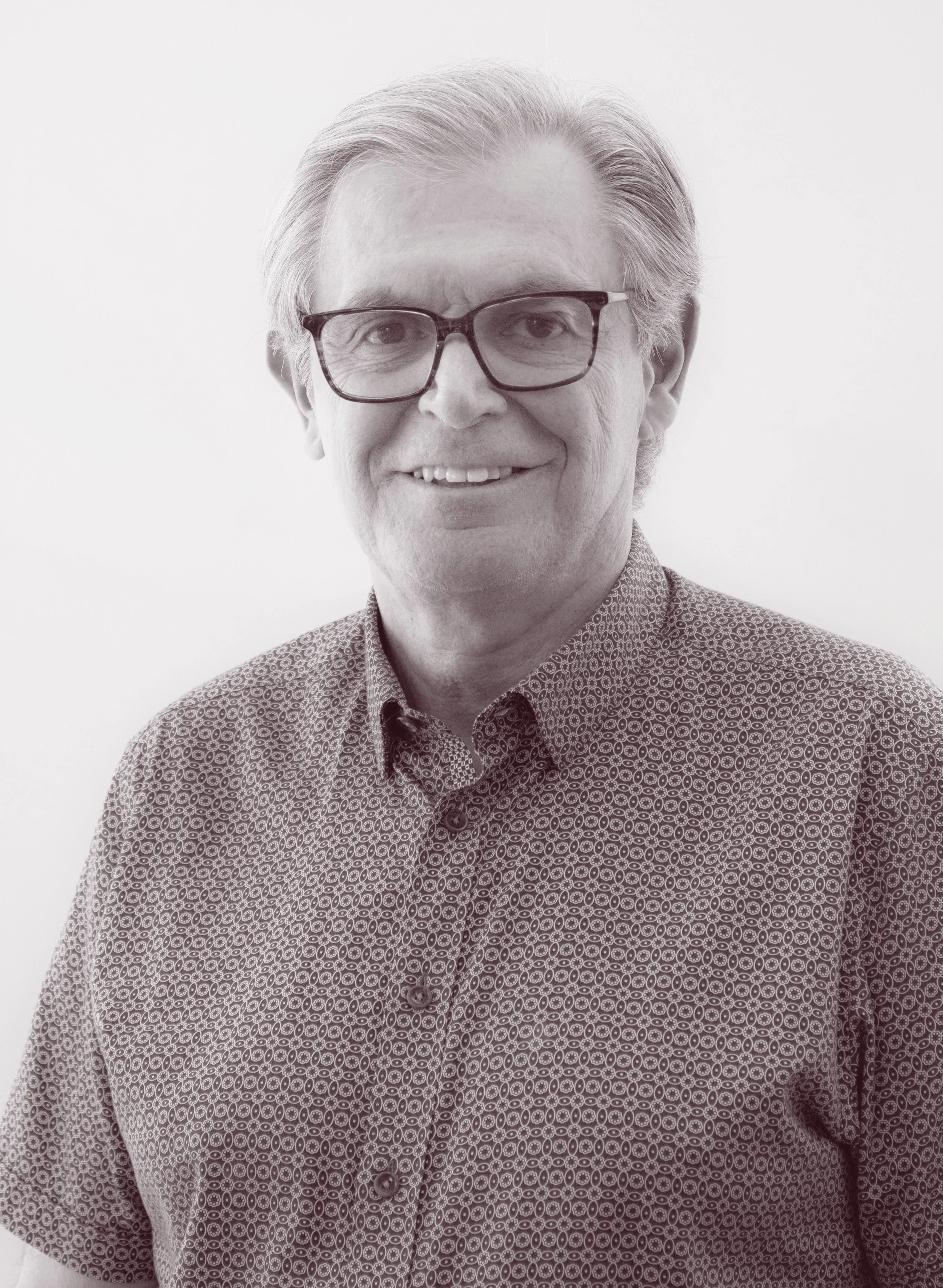
What are you doing now?
Founder and Board Chair, Impact United Academy
Founder, Wisdom Bank
-
Senior executive position with a division of a multi-national advertising and communications firm, which I became part of after the acquisition of a private company where I was one of the founders.
-
Throughout my 30+ year career as a management consultant, an entrepreneur and an executive in national and multinational organizations, I've been fortunate enough to identify and act on some major trends in business over that time. Early in my career it was personal financial planning, and an opportunity to start my first business under the support and leadership of the credit union system in Canada. Then it was on to starting my own data mining consultancy, back before anyone used the term "Big Data," which took me on a fifteen-year journey through several mergers, an acquisition and a management stint with one of the world's largest and most successful marketing services agencies.
And now I have the privilege as part of my Purposeful Third Act to apply what I have learned and experienced to support causes that I care about and focus on challenges that I can think I can help address.
-
After leaving the corporate world and following another brief stint at management consulting, my Purposeful Third Act began with becoming a member of Toniic (toniic.com), a global community of investors seeking to mobilize their investment capital to generate positive social and environmental impact.
The inspiration and learning that I got from Toniic led me to create a community of active and aspiring investors across Canada who believe that their capital can and should create positive social, environmental, and economic benefits for all. As the Founder and Board Chair of Impact United Academy, I have been privileged to be part of a growing number of foundations, family offices and individuals committed to building knowledge, sharing resources, and advancing collaborative action.
More recently, I have built a team to assume the reins of the organization and allow me to find time to be part of another new venture. Along with a great group of five others with time to give and expertise to share, we’ve created Wisdom Bank to help non-profit and social enterprise leaders address an immediate challenge, opportunity or decision.
The idea behind Wisdom Bank is based on two issues that I have been thinking about now for a few years: (1) the challenges facing leaders of non-profit organizations and social enterprises who often lack access to strategic advice; and (2) the opportunity for professionals either in the latter-stages of their career or post-career to contribute what they know and have learned from their years of experience.
We’ve created and tested what we think is a unique model for this type of mentoring, and are planning to take on more engagements and we are excited to see this grow!
-
I left the corporate world at a relatively young age, having “cashed in” on the sale of our company and earning more money than I had ever had in the new role that I was given by the organization that acquired us. But I eventually got to the point where I wasn’t getting a “buzz” anymore from my work, something that I have always had - and needed - as a dyed-in-the-wool entrepreneur. Although the work was challenging, it didn’t feel meaningful to me.
I wasn’t ready for - or interested in - a traditional retirement. I had been given the privilege of not having to make money be part of what I wanted to do next. The question became: what should I do with that privilege? Where can my “time, talents and treasure” - a phrase a colleague of mine taught me years ago - be best applied to help contribute to the changes that I wanted to see in the world?
-
First, take the time - and involve others who know you well - to really understand both what you are passionate about and what you’re good at. It might seem like a luxury to step back and reflect on that, but you’ve earned it!
Then broaden your scope - read stuff you’ve put off or haven’t had time to learn about because you’ve been so busy with your second act! Connect with people, organizations and causes that interest you and that look like they could use someone with your skills and experience.
And be prepared to be a little uncomfortable in the process of finding what your P3A will be about. Even though you’ll be going through this process with a renewed sense of what motivates you and what you can contribute (see point 1), you will likely find opportunities which are somewhat unfamiliar to you, or that you haven’t considered before. Lean into those opportunities! In my case, it led me to create a charitable organization, something that I never thought I would do, or even knew how to do!
-
This is a tough question to answer, but I think it is a very good one! From my perspective, I have had to “unlearn” all of the ways that I have been taught to and been responsible for measuring ROI in the context of both running a business and managing my investments. I needed to rethink the “I” in ROI to focus on my time investment, not necessarily my financial investment.
Once I wrapped my head around that, I began to understand that there are anecdotal ways to measure your investment of time, if you make a point of looking for those. As an example from my own P3A portfolio, I regularly follow up with many of the investors who have attended our events or participated in our discussions, to see if they have actually acted on or invested in something that we talked about. If they did, then I consider that a meaningful and measurable return on my investment of time!
As I start to roll out “Wisdom Bank,” I plan on using that same approach to follow up with the non-profit and start-up leaders that we’re supporting, to find out how our advice helped shape their decision, and what the outcome of that decision has been.
Steve Herman & Evelyn Neaman
What are you doing now?
“Retiring” lawyer working part-time
Filmmaker
“Retirement” influencer
Classic motorcycle rider
Director of Events for the Retirement on Trial project
Documentary producer
Yoga instructor
Amateur mixed media artist
Community board member
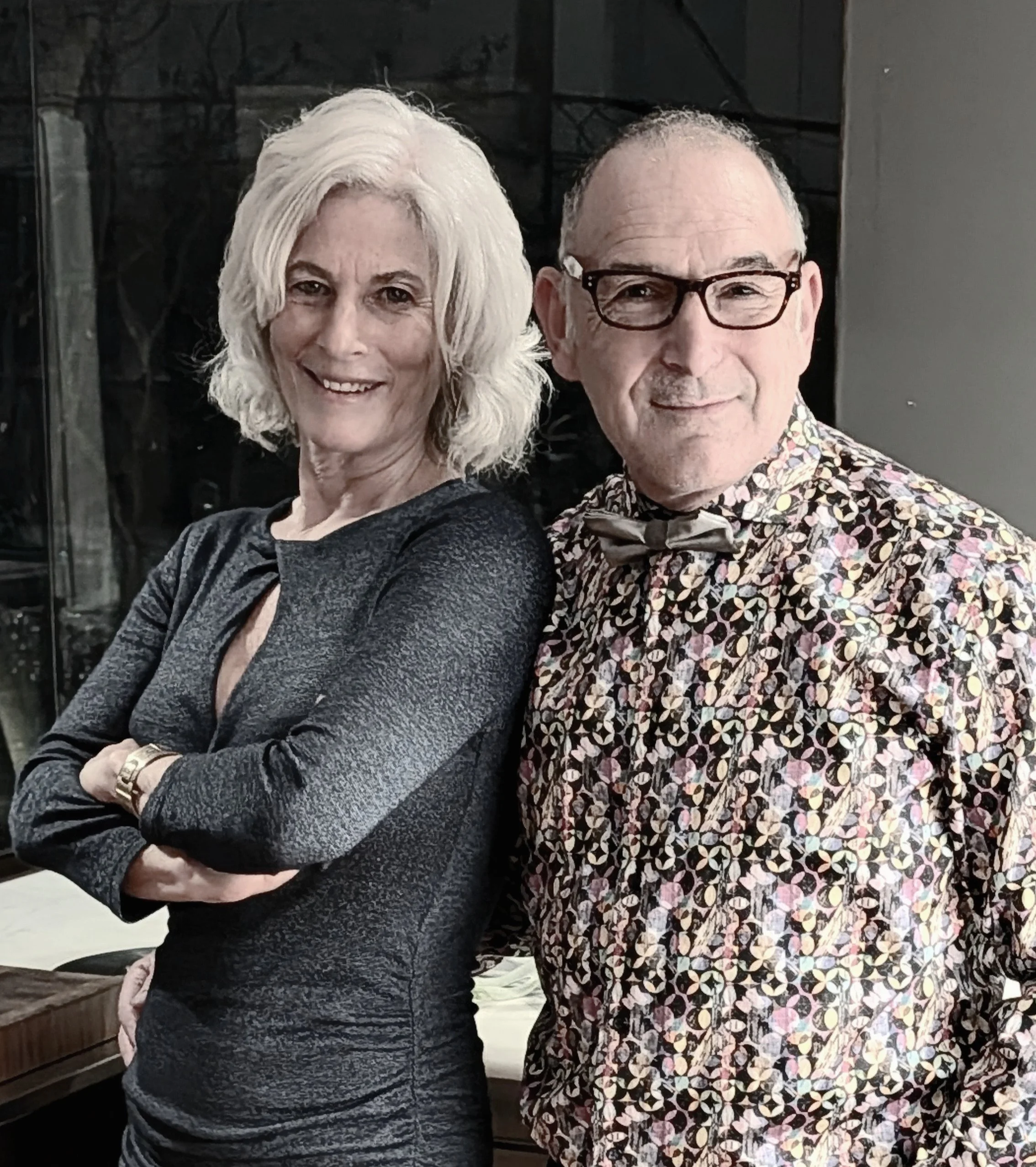
-
Steve was a partner at Scarborough Herman Harvey with a personal injury practice in Vancouver.
Evelyn was the Director of the Guyana Justice Reform Project for the Justice Education Society in Vancouver.
-
Steve
Steve is a civil litigator based in Vancouver, with over 35 years of experience. He is currently transitioning from a full-time to a part-time practice. He has conducted seminars and webinars for lawyers on retirement preparation since 2014.
He is also an amateur documentary filmmaker with a passion for criminal justice reform and has produced documentaries for projects in Ethiopia, Central America, Guyana, and Vietnam.
Steve’s latest documentary, "Retirement on Trial," follows his journey as a lawyer who sets out to make a film about his struggle preparing himself and his colleagues for the significant psychological transition of retirement. The documentary is being showcased at legal conferences and private events throughout North America.
Evelyn
With an impressive 30-year career in program management at the Justice Education Society, a Canadian nonprofit dedicated to access to justice and justice reform, Evelyn is an experienced leader, educator, and producer. Based in Vancouver, she has led initiatives involving the public, judiciary, lawyers, and police across Canada, Ethiopia, Central America, Guyana, and Vietnam. She has also created documentaries and stories highlighting the impact of these projects.
Evelyn co-produced, co-wrote, and co-directed Retirement on Trial with Steve, drawing on her background in cultural anthropology, curriculum, and community education. Through the film, she explores the diverse perspectives and experiences that shape the “culture of retirement.”
Evelyn is also a longtime wellness practitioner and director of a boutique yoga studio. For more than 25 years, she has offered yoga, mindfulness, and wellness programs to the public, as well as to judges and lawyers in Canada and internationally.
-
Our third act isn't about retiring from what we did before. It's about reimagining what decades of experience can make possible next.
Steve
Through the process of making the documentary and speaking with individuals at different stages of this transition, my “retirement case” started to come together. Lawyers and judges who spoke of work fatigue and a longing to leave certain aspects of a full-time law practice also shared their reluctance to let go of a sense of relevance and engagement.
Making the film became a way of exploring those questions “from the outside,” wearing the hat of a filmmaker rather than a confused lawyer. Surprisingly, it created a similar opportunity for the lawyers and judges we interviewed. The film created space for conversations that are often postponed, kept private, or just never take place. It helped me see that the uncertainty and anxiety I was experiencing at the end of my career were not a personal failing or character weakness, but a common feeling of discomfort in contemplating, let alone embracing, the end of a legal career.
Evelyn
We have now developed and piloted a multi-day course for professionals that provides a framework for examining alternative pathways toward their next purposeful act.
We piloted the course at the Modern Elder Academy in Santa Fe, New Mexico, in September 2026. We were pleasantly surprised by how profound the experience was for participants—and by how significantly their perspectives shifted over the course of our time together.
We began with a simple question:
What is the first word that comes to mind when you hear the word “retirement”?
The responses were overwhelmingly negative: dull, irrelevant, unfulfilling, loss, boredom.
At the end of the course, we asked the same question.
The change was striking: opportunity, freedom, less scary, enlightenment, rewirement.
The words themselves captured what had happened. Retirement had shifted from something perceived as an ending to something that could be approached as an opening—a period of possibility, experimentation, meaning, and reinvention.
Our documentary work is evolving too. Building on Retirement on Trial: Legal Edition, our new documentary, Retirement on Trial: Professional Edition, features people from a wide range of backgrounds, including a former university president, a former premier of British Columbia, a farmer, a cardiologist, an architect/public artist, a police officer, and members of the legal community.
Each brings a different perspective on leaving behind a life's work and navigating the changes in identity, purpose, and meaning that come with it. The new film is scheduled to launch in February 2027.
-
Steve
I spent most of my career believing I knew how to approach complex problems. As a lawyer, I was trained to gather evidence, assess the principles a judge might apply, and construct a persuasive case. But when I began thinking seriously about retirement, I realized I had never applied that approach to my own transition.
Those questions and the search for answers led me to co-produce the documentary Retirement on Trial. The film was not born out of expertise, but out of uncertainty and frustration at not being able to find guidance or even a path to resolution. My experience was that the conversation around retirement often focused on finances and logistics, while largely sidestepping the psychological challenges of the loss of identity, meaning, and life purpose.
Evelyn
Steve and I had already co-produced a number of documentaries about the international work I had been doing, and we had enjoyed collaborating on these projects. As I watched Steve’s journey begin to pivot away from full-time legal practice—and with more time becoming available to me—we realized we had an opportunity to collaborate on a new project together.
As a seasoned project director, the transition from my international work to Retirement on Trial felt remarkably natural. The project drew on skills I had been developing since my undergraduate studies in cultural anthropology: listening, observing, asking questions, understanding different perspectives, identifying patterns, and bringing diverse voices together. My years of designing and managing complex international programs had also taught me how to take an idea from its earliest stages through research, collaboration, production, and completion.
Retirement on Trial became a natural evolution of that work, bringing together my experience as an educator, project director, researcher, and filmmaker.
-
Steve
My advice for my colleagues in the legal profession or any other profession is this: don’t be afraid to imagine what the next stage of life could be, and don’t expect to find absolute clarity about the perfect time and model for your retirement through imagining alone. It probably won’t happen.
Instead, accept that retirement is, at some point, inevitable. Planning, imagining, and exploring can make the transition more comfortable and, as we hope for in the cases we take on, result in a better outcome!
Evelyn
Don’t wait for a perfect plan. Look back at what has energized you, identify the skills and interests you want to carry forward, and follow your curiosity. Experiment, stay open to unexpected possibilities, nurture meaningful relationships, and give yourself permission to redefine purpose on your own terms.
Experiment before committing. Treat the third act as a series of small experiments rather than one enormous decision. Try things. Pay attention. Adjust.
Build relationships into the plan. Purpose is rarely found in isolation. Think about the people you want to learn from, contribute to, collaborate with, and spend time with.
Allow your third act to surprise you. Some of the most meaningful opportunities may come from skills, relationships, or interests you developed decades earlier but never imagined would become part of your next chapter.
-
The return on investment has been far greater than financial. We found a passion project that didn’t need to generate income to have real value. Retirement on Trial has given us an opportunity to use decades of experience, creativity, curiosity, and skills in a way that feels deeply personal and meaningful.
Rather than simply writing cheques to philanthropic organizations, we have been able to contribute our time, energy, and knowledge directly to something we believe can make a difference.
The greatest return has been the people we’ve met, the conversations we’ve started, and the opportunity to help others think differently about the next stage of their lives. It has given us a sense of purpose, continued learning, and the satisfaction of creating something that may outlast our own involvement. For us, that is a very different—and much more personal—form of philanthropy.
P3A Advisory Circle
Dear Advisory Circle members:
My heartfelt thanks for your encouragement, thoughtful insights and guidance, honest reflections, and generous support. You remind me what’s possible when good people come together with clarity and purpose.
Thank you for walking alongside me in my Purposeful Third Act - whether as fellow P3Aers or purposeful second actors. Your wisdom, heart, and abundance mindset continue to inspire and elevate the work.
With deep gratitude,


Denise Amyot
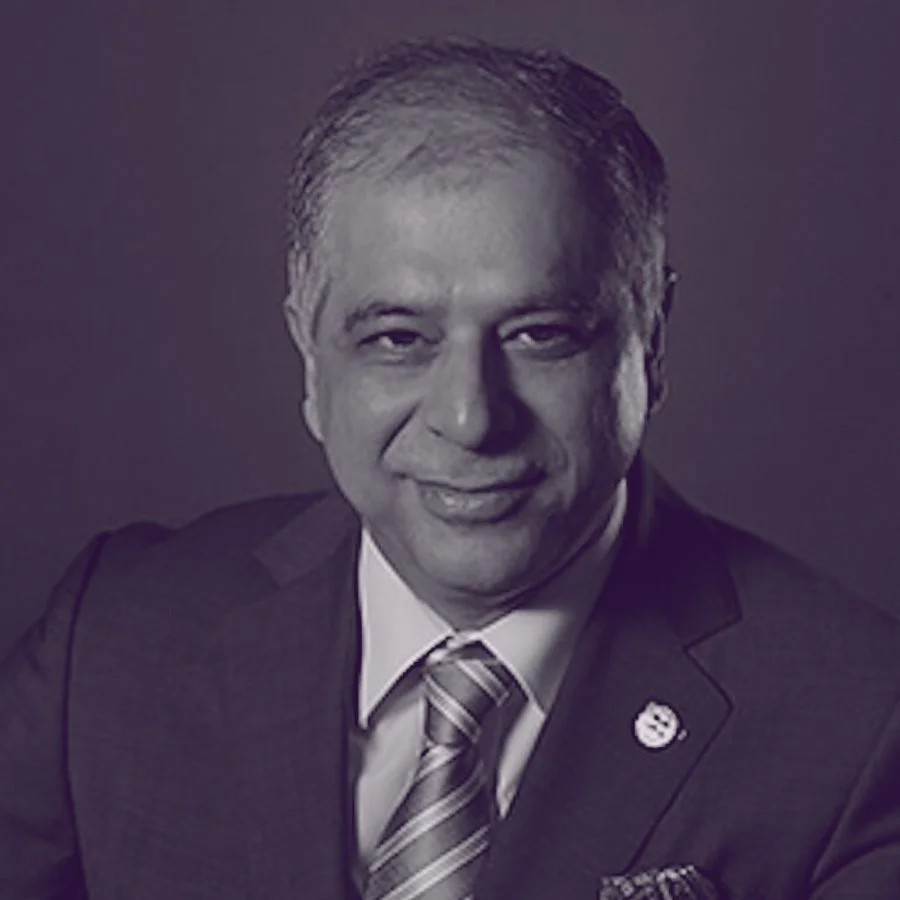
Anil Arora
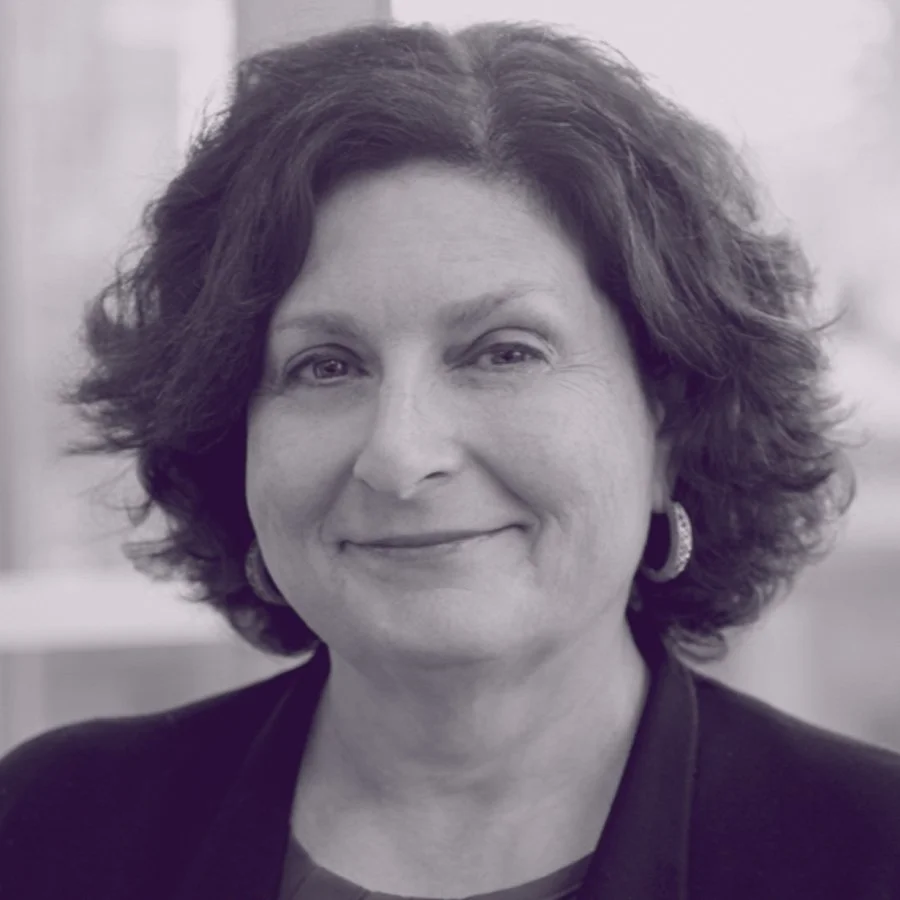
Shari Austin

Simon Chan
Ken Fredeen

Allyson Hewitt

Godyne Sibay

David Smith

Anjum Sultana

Ilse Treurnicht

See below for the terms and conditions and privacy bit.Thought Leaders and Resources for Thriving in our Third Acts
My Purposeful Third Act continues to be inspired and influenced by ideas from a variety of people, resources and conversations, including:
Chip Conley at Modern Elder Academy
The 100-Year Life by Lynda Gratton and Andrew J. Scott
The New Long Life by Lynda Gratton and Andrew J. Scott